Strategic Risk Monitoring: A Practical Guide for Finance Students
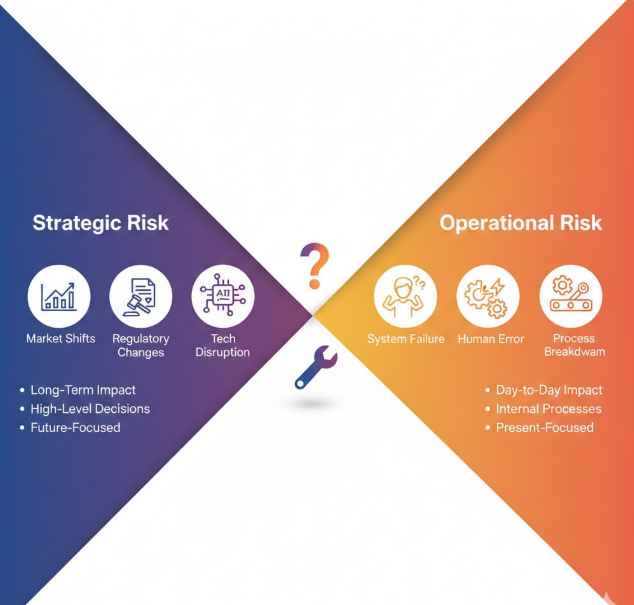
The world of finance is no longer just about balancing ledgers or predicting stock fluctuations. In 2026, the global market is defined by volatility—ranging from rapid AI integration to shifting geopolitical landscapes. For students entering this field, understanding “Strategic Risk Monitoring” is the difference between a failing grade and a professional career. Strategic risk involves the internal and external events that can make a company’s entire business strategy unsuccessful. Unlike operational risks (like a simple technical glitch), strategic risks challenge the very foundation of how a business survives.
Mastering these concepts requires more than just reading a textbook; it demands the ability to apply theoretical frameworks to real-world crises. Many students find themselves overwhelmed by the sheer volume of data required to analyze market trends effectively. If you are struggling to connect these complex theories to your coursework, seeking professional finance assignment help from a trusted provider like MyAssignmentHelp can offer the clarity needed to bridge the gap between classroom learning and practical application. Having an expert perspective can help you see how high-level risk monitoring actually functions in a corporate boardroom.
Understanding the Core Pillars of Strategic Risk
Strategic risk monitoring is not a one-time checkup; it is a continuous pulse-check of a company’s health. To monitor risk effectively, finance students must look at three specific pillars:
- Market Dynamics: This includes changes in consumer behavior or the sudden emergence of a new competitor that makes your current product obsolete.
- Regulatory Shifts: Governments frequently update financial laws. A strategy that worked last year might be illegal or penalized this year.
- Technological Disruption: As we’ve seen with the rise of automated trading and blockchain, technology can change the “rules of the game” overnight.
For a student, the goal is to identify which of these pillars is most vulnerable in a given case study. When you sit down to write your analysis, you aren’t just looking for what went wrong; you are looking for the warning signs that the company ignored.
See also: How Electricians Help Businesses Stay Energy Efficient
How to Build a Risk Monitoring Framework
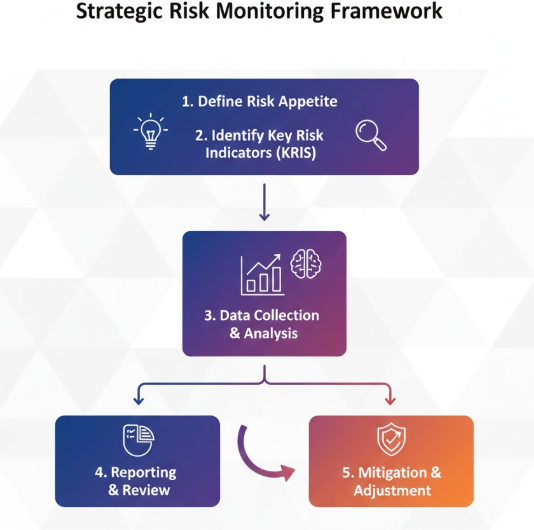
To excel in your finance papers, you should follow a structured approach. First, identify the “Risk Appetite” of the organization—how much danger are they willing to take to achieve their goals? A startup has a high risk appetite, while a 100-year-old bank has a very low one. Next, you must establish Key Risk Indicators (KRIs). These are the metrics that tell you a problem is coming. For example, if a company’s “Customer Acquisition Cost” rises by 20% in one quarter, that is a KRI that their current marketing strategy is failing.
Developing a deep understanding of these frameworks is essential for those looking to specialize in corporate consultancy. If you are currently brainstorming for your final year project, exploring various Finance research topics such as “The Impact of ESG Scores on Strategic Risk” or “AI-Driven Predictive Analytics in Risk Monitoring” can give you a significant edge in your academic career.
Step-by-Step: Conducting a Strategic Risk Audit
1. Environmental Scanning
This is the “detective work” phase. You need to look outside the company. Use tools like PESTLE analysis (Political, Economic, Social, Technological, Legal, and Environmental) to see what is happening in the world. For a finance student, this means staying updated with global news. You cannot monitor strategic risk if you don’t know that a trade war is starting or that a new carbon tax has been proposed.
2. Gap Analysis
Once you know what is happening in the world, look at the company’s current plan. Is there a gap? If the world is moving toward “Green Energy” but your company is still investing 90% of its capital in fossil fuels, you have identified a massive strategic risk. This gap is where most companies fail, and it’s the most important part of any finance assignment.
3. Quantitative Modeling
Finance is ultimately a numbers game. You need to put a price tag on the risk. What is the “Value at Risk” (VaR)? If the strategic risk comes true, will it cost the company $10 million or $1 billion? Using mathematical models helps move the conversation from “I think this is a problem” to “This is a quantified threat to our survival.”
4. The Mitigation Plan
Monitoring is useless if you don’t have a plan to react. A good student guide always emphasizes “Mitigation.” This could mean diversifying the product line, hedging financial bets, or completely pivoting the business model. In your essays, always provide a clear, actionable solution. Don’t just point out the fire; show how to use the fire extinguisher.
Conclusion: The Future of Finance
Strategic risk monitoring is the “radar system” of the financial world. As a student, mastering this doesn’t just help you pass your exams—it prepares you to be a leader in an uncertain economy. By focusing on data-driven insights, keeping a close eye on global trends, and utilizing the right academic resources, you can transform from a student into a finance professional who knows how to navigate the storm.
Remember, the best finance papers are those that tell a story through data. Use the frameworks, identify the gaps, and always suggest a way forward.
Frequently Asked Questions
What is the main difference between strategic and operational risk?
Strategic risks involve high-level threats that can derail long-term goals, such as market shifts or new laws. Operational risks are ground-level issues, like system failures or human error, that impact daily business activities.
How often should a monitoring framework be updated?
It should be an ongoing process. While formal reviews might happen quarterly or annually, the monitoring of key risk indicators (KRIs) should occur in real-time or monthly to catch emerging threats before they escalate.
What are Key Risk Indicators (KRIs)?
KRIs are specific metrics used to signal changes in risk levels. For finance, this might include a sudden drop in a company’s liquidity ratio or a sharp increase in customer acquisition costs, both of which serve as early warning signs.
Can students use qualitative data for risk analysis?
Yes. While quantitative data (numbers) is vital in finance, qualitative data—such as changes in leadership, brand reputation, or geopolitical stability—provides the necessary context to understand why a strategy might fail.